

You know that feeling. Your shoulders are tight before you even get out of bed. Your mind is already three arguments ahead of a conversation that hasn’t happened yet. You tell yourself it’s just a busy season, a rough week, too much coffee. But somewhere underneath the excuses, a quieter question keeps surfacing: is this normal stress and anxiety, or is it something more?
That question matters. Because stress and anxiety, while related, are not the same thing and knowing the difference can change how you take care of yourself.
Stress and Anxiety Aren’t the Same Thing
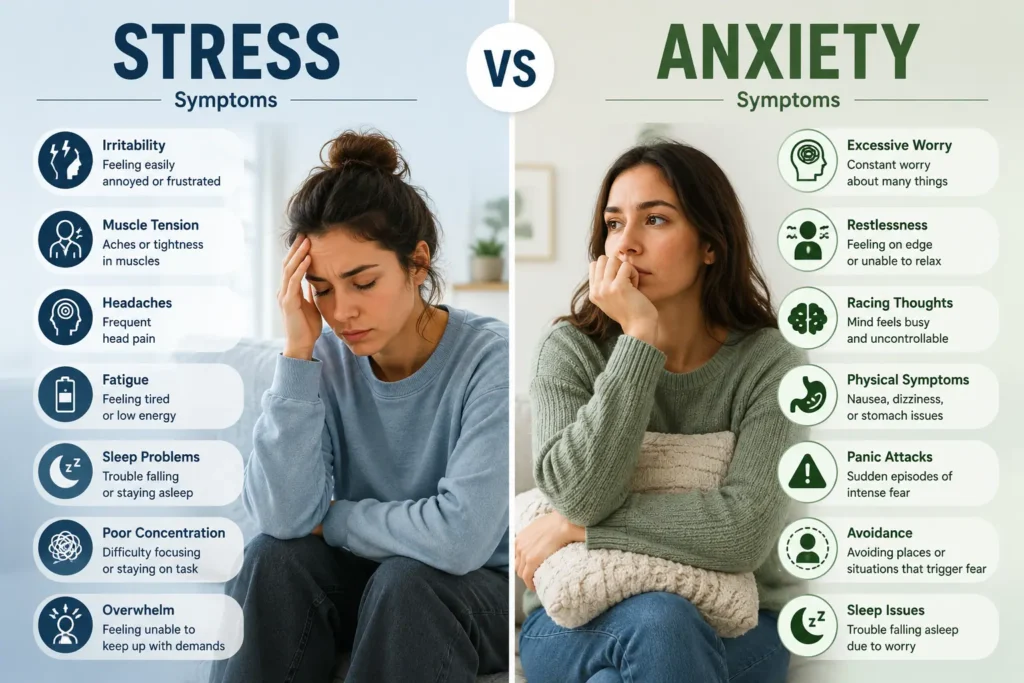
Stress is your body’s response to a specific pressure a deadline, a fight with your partner, a bill you weren’t expecting. Once the pressure lifts, stress usually fades with it. Anxiety is different. It’s your body’s reaction to stress, and it can also happen on its own even when there’s no immediate threat or pressure in front of you.
In other words, stress typically has a clear cause and a clear end point. Anxiety often doesn’t. It can linger for weeks or months, showing up even on days when everything, on paper, is fine.
The Problem With “Pushing Through”
Many people wait far too long to talk to someone. They tell themselves anxiety is a personality trait, a productivity hack, or just “how I’ve always been.” Meanwhile, the nervous system keeps running in overdrive and over time, that takes a real toll on sleep, relationships, focus, and physical health.
This matters for everyone: parents juggling work and kids, teenagers navigating school pressure, professionals managing high-stakes jobs, and retirees adjusting to life changes. Anxiety doesn’t check your calendar first.
Symptoms: How Anxiety Shows Up
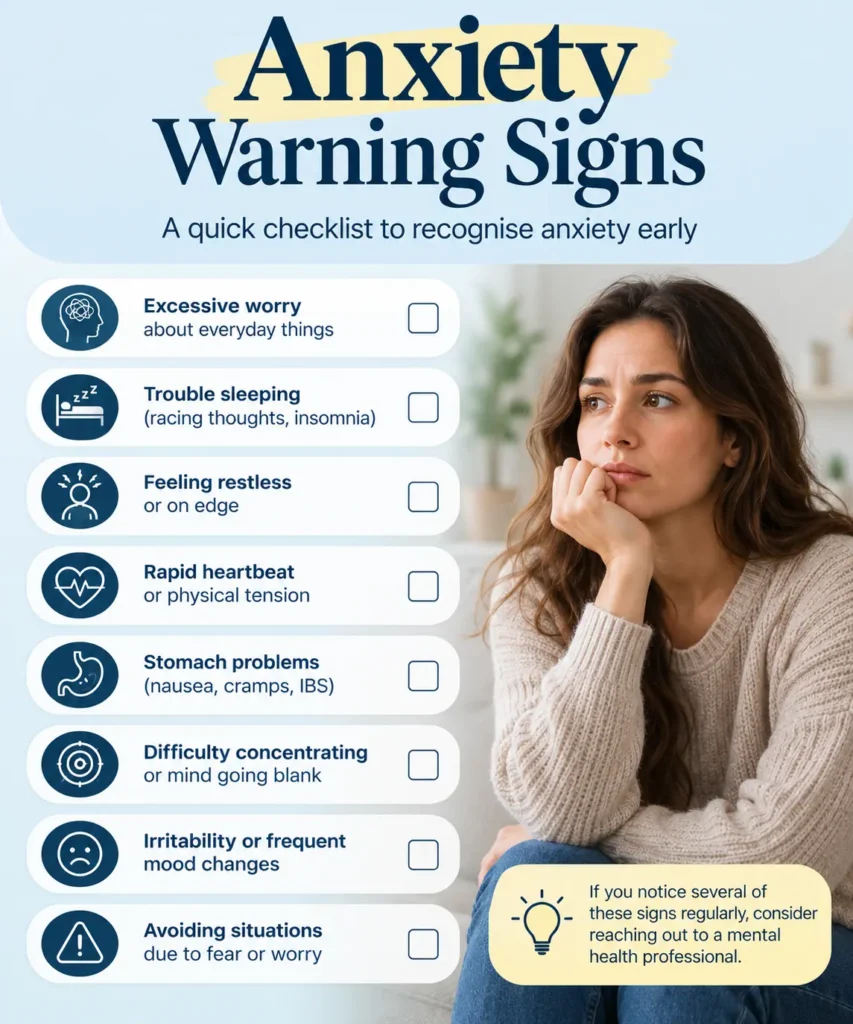
Anxiety rarely stays in your head. It moves through your whole body. Common symptoms include:
- Persistent, hard-to-control worry
- Racing or repetitive thoughts
- Muscle tension, especially in the neck, jaw, or shoulders
- Fatigue, even after a full night’s sleep
- Trouble concentrating or “blanking out”
- Irritability or feeling on edge
- Sleep problems trouble falling asleep or staying asleep
- Restlessness or feeling keyed up
- Avoiding situations that trigger worry
Did You Know? According to the National Institute of Mental Health, an estimated 5.7% of U.S. adults experience generalized anxiety disorder at some point in their lives, making it one of the most common mental health conditions.
Physical Symptoms of stress and anxiety People Often Miss
Anxiety frequently shows up as physical sensations before it’s recognized as an emotional issue. These can include:
- Rapid heartbeat or heart palpitations
- Shortness of breath or a feeling of tightness in the chest
- Dizziness or lightheadedness
- Nausea or stomach discomfort
- Sweating or trembling
- Headaches or jaw clenching
Warning Sign Box: If physical symptoms like chest pain, shortness of breath, or dizziness are new, severe, or come with numbness or pressure, seek emergency medical evaluation first to rule out cardiac or other urgent causes then follow up on the anxiety piece afterward.
What Causes Anxiety Disorders?
Anxiety disorders develop through a mix of factors, not a single cause. Contributing factors often include:
- Genetics: a family history of anxiety or mood disorders
- Brain chemistry: imbalances in neurotransmitters like serotonin and GABA
- Life experiences: trauma, chronic stress, major life transitions
- Personality traits: perfectionism, high self-criticism
- Medical factors: thyroid issues, certain medications, or chronic illness
No single cause explains every case, which is part of why a proper psychiatric evaluation matters it helps identify what’s actually driving your symptoms instead of guessing.
Who Is Affected and Who’s at Higher Risk
Anxiety doesn’t discriminate by age, income, or background, but certain groups face elevated risk:
- People with a family history of anxiety or depression
- Teenagers navigating academic and social pressure
- New parents adjusting to major life changes
- Professionals in high-demand careers
- People who’ve experienced trauma or loss
- Individuals managing chronic illness
Anxiety and Stress: A Side-by-Side Look
| Feature | Everyday Stress | Anxiety Disorder |
|---|---|---|
| Trigger | Clear, identifiable cause | Often no clear trigger |
| Duration | Resolves once the stressor passes | Persists for weeks or months |
| Intensity | Manageable, fluctuates | Can feel constant or overwhelming |
| Physical symptoms | Occasional tension | Frequent racing heart, GI upset, fatigue |
| Impact on daily life | Minimal, short-term | Interferes with work, sleep, relationships |
| Response to rest | Improves with rest/relaxation | Often persists despite rest |
Myth vs. Fact Myth: “Anxiety is just overthinking you can talk yourself out of it.” Fact: Anxiety disorders involve real changes in brain chemistry and nervous system regulation. Willpower alone rarely resolves it but treatment does.
When Should You See a Psychiatrist for Anxiety?

Consider reaching out for a professional evaluation if:
- Worry feels constant or hard to control
- Symptoms have lasted more than a few weeks
- Anxiety interferes with work, school, or relationships
- You’re avoiding situations you used to handle fine
- Physical symptoms (racing heart, GI issues, fatigue) show up regularly
- You’ve tried self-help strategies without relief
Expert Advice: A psychiatric evaluation isn’t just about medication. It’s a comprehensive look at your symptoms, history, and lifestyle to build a treatment plan that actually fits you whether that means therapy, medication, lifestyle changes, or a combination.
How Anxiety Affects Relationships and Daily Life
Left untreated, anxiety can quietly reshape how you show up for the people around you. It might look like:
- Snapping at loved ones over small things
- Withdrawing from social plans
- Struggling to be fully present with family
- Difficulty making decisions, even small ones
- Constant reassurance-seeking from a partner or friend
None of this makes you a bad partner, parent, or friend it makes you someone whose nervous system needs support.
Treatment That Actually Helps

The encouraging news: anxiety disorders are highly treatable. Effective approaches often include:
- Individual therapy: especially cognitive behavioral therapy (CBT), which helps identify and reframe anxious thought patterns
- Medication management: for some people, medication helps regulate brain chemistry enough to make other coping tools more effective
- Genetic testing (GeneSight®): helps identify which medications are more likely to work well for your body, reducing trial and error
- Group therapy: connecting with others who understand what you’re going through
- Lifestyle adjustments: sleep, movement, and nutrition all influence anxiety symptoms
Quick Tip: Treatment isn’t one-size-fits-all. What works for a friend or family member may not be the right fit for you which is why an individualized, professional plan matters.
How A New Hope Psychiatric Services Helps
At A New Hope Psychiatric Services, we understand how exhausting it is to carry anxiety alone. Our team provides compassionate, evidence-based care for children, adolescents, and adults across Florida combining psychiatric evaluations, medication management, individual and group therapy, and personalized treatment plans built around your life, not a generic checklist.
We offer:
- Telehealth appointments available throughout Florida
- In-person appointments at our Clermont, Florida office
- Both insurance and self-pay options
- Providers and therapists currently accepting new patients
Whether your anxiety started recently or has followed you for years, you don’t have to figure out where the line is between stress and something more on your own.
A Gentle Reminder
If you’re reading this and recognizing yourself in these symptoms, that recognition is meaningful. It means you’re paying attention to your own wellbeing and that’s the first step toward feeling better.
Frequently Asked Questions
Stress usually has a clear cause and fades once that cause resolves. Anxiety can persist without an obvious trigger and often continues even when circumstances improve.
Yes. Chronic, unmanaged stress can contribute to the development of an anxiety disorder over time, especially without healthy coping tools or support.
Racing heart, muscle tension, fatigue, gastrointestinal discomfort, shortness of breath, and headaches are among the most common physical symptoms.
Clinically, generalized anxiety disorder is typically considered when excessive worry occurs more days than not for at least six months, though a professional evaluation is the best way to know for sure.
Yes, anxiety can cause chest tightness and breathing difficulty. However, new or severe chest pain should always be evaluated by a medical professional to rule out cardiac causes first.
Anxiety disorders can run in families, though genetics is only one contributing factor alongside brain chemistry, environment, and life experiences.
Panic attacks tend to peak quickly and intensely, often within minutes, while anxiety symptoms usually build more gradually and can persist longer at a lower intensity.
Yes. Anxiety is one of the most common mental health conditions in children and teens, though it can look different than in adults often showing up as irritability, stomachaches, or school avoidance.
For some, mild anxiety may ease with lifestyle changes. However, persistent or worsening anxiety often benefits significantly from professional treatment.
A provider will review your symptoms, medical and family history, and daily functioning to understand what’s driving your anxiety and recommend an individualized treatment plan.
Not always. Some people manage anxiety effectively with therapy and lifestyle changes alone, while others benefit from medication, especially for moderate to severe symptoms.
GeneSight® is a genetic test that helps providers understand how your body may respond to certain psychiatric medications, which can reduce trial-and-error in finding an effective treatment.
Yes, particularly cognitive behavioral therapy, which is one of the most well-researched and effective treatments for anxiety disorders.
With fewer distractions and a naturally quieter mind at night, anxious thoughts often become more noticeable, and cortisol patterns can also play a role.
Through psychiatric evaluations, medication management, individual and group therapy, and personalized treatment plans available via telehealth throughout Florida or in-person in Clermont.
Many insurance plans cover psychiatric and therapy services; A New Hope accepts both insurance and self-pay patients to make care more accessible.
Yes. Telehealth psychiatry and therapy are effective options for many people and are available throughout Florida.
Regular sleep schedules, physical movement, limiting caffeine, mindfulness practices, and social connection can all support anxiety management alongside professional treatment.
If anxiety is interfering with your work, relationships, sleep, or daily functioning, or has lasted more than a few weeks, it’s a good time to consult a professional.
Yes, our therapists and psychiatric providers are currently accepting new patients for both telehealth and in-person appointments in Clermont, Florida.