
“But you don’t seem depressed.”
If you’ve lived with the symptoms of depression, you’ve probably heard some version of that sentence. Maybe you smiled through it. Maybe you laughed at the right moments, showed up to work, texted back on time. And underneath all of it, something felt hollowed out not sad, exactly. Just gone.
That gap between how depression looks and how it actually feels is one of the biggest reasons people go undiagnosed for years. So let’s clear something up right away: the real symptoms of depression go far beyond sadness, and understanding them could change how you see yourself or someone you love.
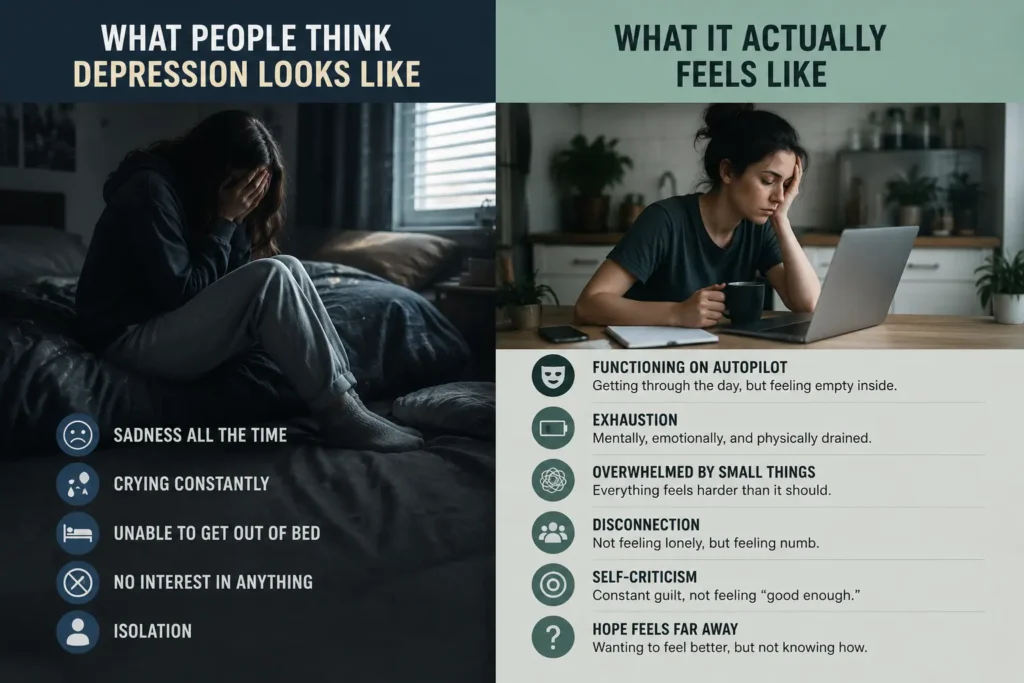
Myth vs. Fact: The Sadness Misconception
Myth: “Depression just means you’re really sad.” Fact: Sadness is only one possible symptom of depression and for many people, it’s not even the most prominent one. Numbness, irritability, physical fatigue, and loss of interest are just as common, and sometimes more so.
This myth causes real harm. People who don’t feel classically “sad” often assume they can’t be depressed, so they never ask for help. Meanwhile, the actual symptoms of depression they’re experiencing flatness, exhaustion, disconnection go unaddressed for months or years.
What the Real Symptoms of Depression Actually Look Like
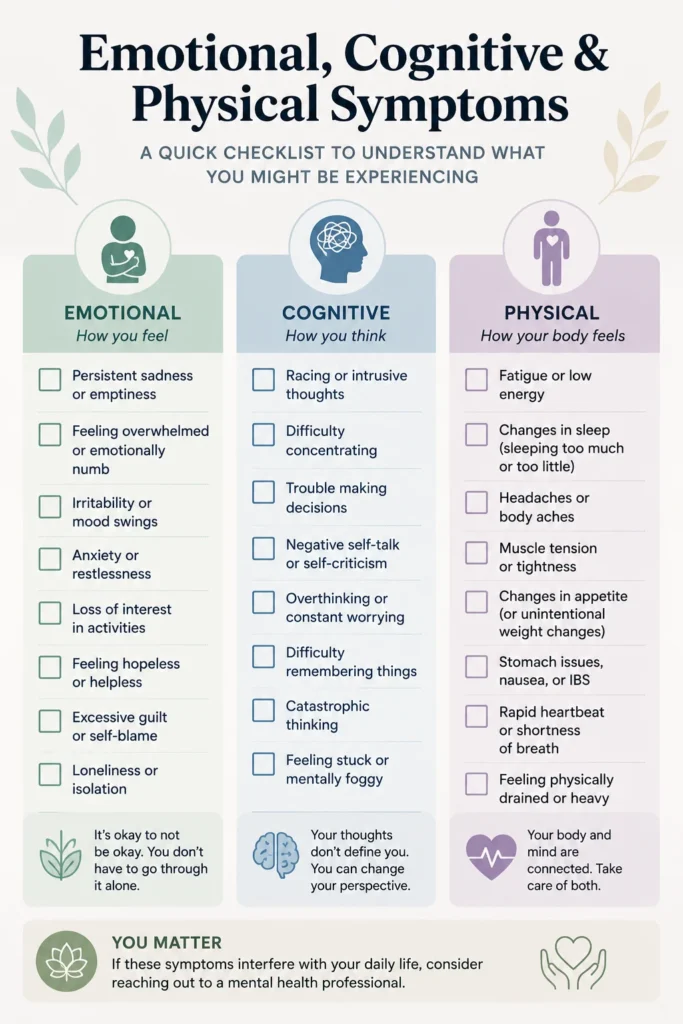
Depression is a whole-body, whole-mind condition. Clinically, it involves a cluster of symptoms of depression that persist most of the day, nearly every day, for at least two weeks. These generally fall into three categories.
Emotional Symptoms
- Persistent low mood, emptiness, or numbness
- Loss of interest or pleasure in activities you used to enjoy (anhedonia)
- Feelings of worthlessness or excessive guilt
- Irritability or a short fuse, especially in men
- Hopelessness about the future
- Difficulty feeling connected to others
Cognitive Symptoms
- Trouble concentrating or making decisions
- Slowed thinking or “brain fog”
- Persistent negative self-talk
- Forgetfulness that feels out of character
Physical Symptoms
- Fatigue or low energy, even with adequate sleep
- Sleep changes insomnia or oversleeping
- Appetite or weight changes in either direction
- Unexplained aches, headaches, or digestive issues
- Slowed movement or speech, or restlessness
Quick Tip: If you’re unsure whether what you’re experiencing counts, ask: has this lasted most of the day, nearly every day, for two weeks or more? That duration and consistency is often what separates a rough stretch from clinical depression.
Can Depression Cause Physical Pain?
Yes and this surprises a lot of people. Depression and the body’s pain-processing systems share overlapping brain chemistry, particularly involving serotonin and norepinephrine. That’s why chronic headaches, back pain, and digestive discomfort are frequently reported alongside the emotional symptoms of depression, even when there’s no separate medical explanation.
Did You Know? Research reviewed by the National Institute of Mental Health notes that depression and chronic pain frequently occur together, and each can make the other harder to treat if addressed in isolation.
Major Depression vs. Persistent Depressive Disorder
Not all depression looks the same. Two of the most common forms are:
| Feature | Major Depressive Disorder | Persistent Depressive Disorder (Dysthymia) |
|---|---|---|
| Duration | Episodes of 2+ weeks | Lasts 2+ years, most days |
| Intensity | Often more severe | Typically milder but chronic |
| Pattern | Can come in distinct episodes | Low-grade and ongoing |
| Impact | Can be disabling during episodes | Wears down quality of life over time |
| Treatment | Therapy, medication, or both | Therapy, medication, or both |
Both are real, both are treatable, and both deserve professional attention persistent depressive disorder is often dismissed as “just my personality,” when it’s actually a diagnosable, treatable condition.
Why Depression Makes Everyday Tasks Feel Impossible
Doing the dishes. Answering an email. Taking a shower. To someone without depression, these are small tasks. To someone experiencing the symptoms of depression, they can feel like climbing a mountain because depression doesn’t just lower mood, it depletes the brain’s motivation and energy systems.
This isn’t laziness. It’s a measurable disruption in how the brain regulates dopamine and motivation. Understanding that distinction matters, both for the person experiencing it and for the people who love them.
Who Depression Affects and Often Overlooks
- Men often show irritability, anger, or risk-taking rather than visible sadness, which means depression in men is frequently missed.
- Women may experience symptoms tied to hormonal shifts postpartum, perimenopause, or the menstrual cycle that intensify or trigger depressive episodes.
- Teenagers often show depression as irritability, withdrawal from friends, or a drop in grades rather than open sadness.
- High achievers may mask symptoms entirely, continuing to perform at work while feeling hollow underneath sometimes called “high-functioning depression.”
- Older adults may present with physical complaints or memory issues rather than emotional ones, which can lead to missed diagnoses.
Seasonal Depression (SAD)
For some, the symptoms of depression follow a seasonal pattern worsening in fall and winter as daylight decreases. Seasonal affective disorder shares core symptoms with major depression but is tied to seasonal light changes and often responds well to light therapy alongside standard treatment.
Warning Sign Box: If depressive symptoms include thoughts of self-harm or suicide, this is a medical emergency. Call or text 988 (Suicide & Crisis Lifeline) immediately, or go to the nearest emergency room.
When Should You Seek Help? After having Symptoms of Depression
Consider reaching out to a professional if:
- Low mood or numbness has lasted two weeks or more
- You’ve lost interest in things you used to enjoy
- Daily tasks feel disproportionately exhausting
- Sleep or appetite has changed noticeably
- You’re withdrawing from people you care about
- Thoughts of hopelessness or self-harm have surfaced

Expert Advice: A psychiatric evaluation isn’t about labeling you it’s about understanding your specific pattern of symptoms so treatment can actually target what’s happening in your brain and body, not a generic version of depression.
How Therapy and Medication Work Together
For many people, the most effective treatment for depression combines two approaches:
- Therapy: particularly cognitive behavioral therapy, which helps identify and shift the thought patterns that fuel depressive symptoms
- Medication management: antidepressants can help regulate the brain chemistry underlying persistent symptoms of depression, especially for moderate to severe cases
- Genetic testing (GeneSight®): helps identify which medications your body is more likely to respond well to, reducing trial and error
- Group therapy: reduces isolation by connecting you with others who understand

Neither therapy nor medication is inherently “better” they often work best together, tailored to your specific symptoms and history.
How A New Hope Psychiatric Services Helps
At A New Hope Psychiatric Services, we know depression rarely looks the way people expect. Our team provides compassionate, evidence-based care for children, adolescents, and adults across Florida, offering psychiatric evaluations, medication management, individual and group therapy, and personalized treatment plans built around your actual symptoms not assumptions.
We offer:
- Telehealth appointments available throughout Florida
- In-person appointments at our Clermont, Florida office
- Both insurance and self-pay options
- Providers and therapists currently accepting new patients
If what you’re feeling doesn’t match the “sad all the time” stereotype, that doesn’t mean it isn’t depression. It means it’s time to talk to someone who understands the full picture.
Frequently Asked Questions
Depression can include numbness, irritability, fatigue, changes in sleep or appetite, difficulty concentrating, and physical aches sadness is only one possible symptom among many.
Yes. Many people experience depression as emptiness, irritability, or physical exhaustion rather than classic sadness.
Clinically, major depressive disorder typically requires symptoms most of the day, nearly every day, for at least two weeks.
Yes. Depression can contribute to headaches, muscle aches, and digestive discomfort due to shared brain chemistry involved in mood and pain regulation.
Major depression tends to occur in more intense episodes, while persistent depressive disorder is a milder but longer-lasting pattern spanning two years or more.
Men often show irritability or anger, while women’s symptoms may be influenced by hormonal changes both are valid presentations of depression.
Withdrawal from friends, irritability, declining grades, and changes in sleep or appetite are common signs of teen depression.
SAD is a form of depression tied to seasonal changes in daylight, typically worsening in fall and winter.
If low mood, numbness, or loss of interest has persisted for two weeks or more and is affecting daily functioning, it’s time to consult a professional.
For some people, yes particularly with mild to moderate symptoms. Others benefit from combining therapy with medication.
GeneSight® is a genetic test that helps providers understand how your body may respond to certain psychiatric medications, reducing trial and error in treatment.
Yes. Cognitive symptoms like brain fog, forgetfulness, and difficulty focusing are common with depression.
It refers to someone who continues performing daily responsibilities while privately experiencing significant depressive symptoms.
Through psychiatric evaluations, medication management, individual and group therapy, and personalized treatment plans available via telehealth throughout Florida or in-person in Clermont.
Many insurance plans cover psychiatric and therapy services; A New Hope accepts both insurance and self-pay patients.
Yes, telehealth psychiatry and therapy are available throughout Florida.
Seek immediate help by calling or texting 988 (Suicide & Crisis Lifeline) or going to the nearest emergency room.
Regular sleep, physical activity, social connection, and consistent routines can support treatment, though they aren’t a substitute for professional care.
Grief and depression can share symptoms, but grief typically comes in waves tied to reminders of loss, while depression tends to be more persistent and pervasive.
Yes, our therapists and psychiatric providers are currently accepting new patients for both telehealth and in-person appointments in Clermont, Florida.