

Maria was 38 when a therapist finally said the words out loud: “This sounds like ADHD.” For years, she had been treated for anxiety and, at one point, mild depression. She’d tried breathing exercises, journaling, even switching jobs twice. Convinced that a calmer environment would finally fix the constant sense of falling behind. Nothing quite worked, because anxiety wasn’t the whole story. Many women with ADHD receive other labels before anyone recognizes the real cause, and Maria’s story reflects an experience far more common than most people realize.
The Diagnosis Gap: Why ADHD in Women Gets Missed
For most of psychiatric history, ADHD research focused on hyperactive young boys. That narrow lens shaped how clinicians, teachers, and even parents learned to recognize the condition. As a result, generations of women grew up with symptoms that didn’t match the stereotype, so nobody thought to look further.
This isn’t a small oversight. It has real consequences. Women frequently receive an ADHD diagnosis a decade or more after symptoms first appear. Many women spend years receiving treatment for anxiety or depression, or hearing people tell them to “get more organized,” before anyone recognizes ADHD as the underlying cause.” Understanding this diagnosis gap is the first step toward closing it.
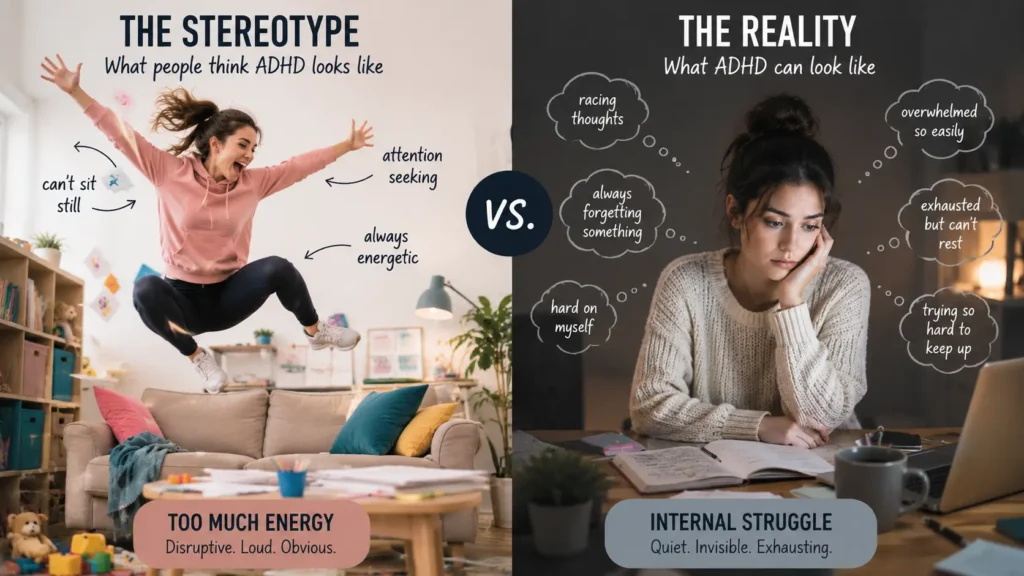
How Symptoms Present Differently of ADHD in Women
Boys with ADHD are often identified early. Because their symptoms tend to be outwardly disruptive climbing furniture, blurting out answers, struggling to sit still. Girls and women, on the other hand, tend to internalize the same underlying struggles.
Instead of visible hyperactivity, it often looks like:
- Daydreaming through conversations or meetings without meaning to
- Working twice as hard to appear “put together” on the outside
- Chronic, quiet anxiety about forgetting something important
- Emotional overwhelm that feels disproportionate to the situation
- A nagging sense of underachievement despite genuine effort
Because these patterns rarely disrupt a classroom or workplace. The way outward hyperactivity does, they’re far easier for providers, teachers, and even the women themselves to overlook.
Signs You Might Recognize ADHD in Women
Clinical research and the lived experiences of women reveal some of the most commonly overlooked signs of ADHD.
- Chronic overwhelm. Everyday tasks replying to emails, planning meals, keeping up with appointments feel disproportionately exhausting.
- Perfectionism as a coping tool. Many women unconsciously use perfectionism to compensate for underlying disorganization, which can mask symptoms for years.
- Emotional sensitivity. Criticism, conflict, or even minor setbacks can trigger intense emotional reactions that feel hard to control.
- Forgetfulness in daily life. Losing track of keys, appointments, or conversations, despite genuinely trying to stay on top of things.
- Burnout. A pattern of pushing through exhaustion to keep up appearances, followed by periods of complete depletion.
- Difficulty with follow-through. Starting projects with enthusiasm but struggling to see them through to completion.
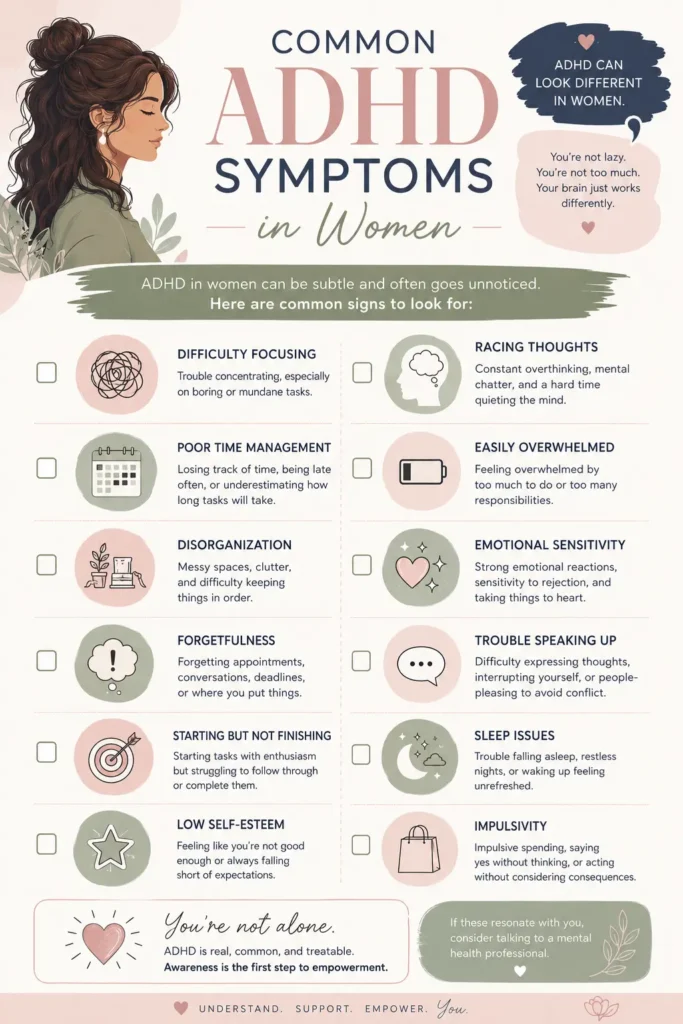
Quick Tip: If these patterns have followed you since childhood, even quietly, it may be worth discussing them with a psychiatric provider who has experience evaluating ADHD in women specifically.
The Conditions ADHD in Women Often Hides Behind
Because symptoms are so easily internalized, women are frequently diagnosed with other conditions first. This doesn’t mean those diagnoses are wrong many women do genuinely experience anxiety or depression. But they may only be part of a larger picture.
- Generalized anxiety: The fear of forgetting something or falling behind can mimic anxiety. When the underlying driver is actually executive dysfunction.
- Depression: Years of feeling like you’re never quite keeping up can lead to genuine low mood. Which sometimes overshadows the ADHD driving it.
- People often label women with ADHD as “scattered” or “too sensitive,” overlooking a legitimate and treatable condition.
Myth vs. Fact
| Myth | Fact |
|---|---|
| ADHD only looks like hyperactivity | Many women experience a quieter, inattentive presentation |
| Women don’t get ADHD as often as men | Diagnosis rates differ, but underlying prevalence is thought to be far more similar than historical data suggests |
| If you’re successful, you can’t have ADHD | Many high-achieving women mask symptoms through overcompensation |
| ADHD symptoms stay the same throughout life | Hormonal changes can significantly shift symptom intensity over time |
A Closer Look at Common Misdiagnoses of ADHD in Women
It’s worth spending a bit more time on why certain misdiagnoses happen so often, since understanding the overlap can help you advocate for a more complete evaluation.
Generalized Anxiety Disorder: Anxiety and executive dysfunction can look nearly identical from the outside. Constantly worrying about forgetting a deadline is different from an underlying difficulty organizing tasks in the first place. But both can produce the same visible stress response, making them easy to conflate without a detailed history.
Major Depressive Disorder: Chronic underachievement, low motivation, and fatigue are common in both depression and unmanaged symptoms. Some women receive treatment for depression for years without lasting improvement because no one recognizes ADHD as the underlying cause.
Borderline Personality Traits: Emotional intensity and rejection sensitivity can sometimes misread. Personality-based patterns rather than a neurodevelopmental root cause, particularly when a provider isn’t looking specifically for it.
Thyroid and Hormonal Conditions: Fatigue, brain fog, and mood changes overlap significantly with thyroid disorders and hormonal shifts, which is one reason a thorough medical history matters during evaluation.
None of this means existing diagnoses made carelessly. It simply reflects how much overlap exists between conditions, and why a provider experienced in recognizing these patterns can make a meaningful difference in reaching the right answer.
Hormones and Their Role of ADHD in Women
One of the more overlooked pieces of this picture is the connection between hormones and focus. Estrogen influences dopamine activity in the brain, which means fluctuations across the menstrual cycle, pregnancy, postpartum recovery, and menopause can all intensify or ease symptoms.
Many women notice their focus and emotional regulation shift around their cycle, without ever connecting it to ADHD. Others find that symptoms they’d managed for years suddenly feel unmanageable during perimenopause, as declining estrogen levels affect the brain’s ability to regulate attention and mood. Recognizing this connection can be an important piece of getting an accurate diagnosis and building an effective treatment plan.

ADHD in Women Across Life Stages
Symptoms rarely stay static. For many women, the experience shifts noticeably at different points in life, which is part of why a single snapshot evaluation can miss the bigger picture.
Childhood: A girl with ADHD might be the quiet daydreamer at the back of the classroom, not the disruptive one. She may get good enough grades to avoid attention while privately struggling to keep up with the mental load of school.
Adolescence: Hormonal changes during puberty often intensify emotional symptoms. Combined with growing social and academic pressure, this is a stage where many girls first develop coping habits like over-preparing or people-pleasing that mask underlying struggles for years.
Young Adulthood: College or early career life removes the external structure that once helped compensate for executive function challenges. Many women describe this stage as the first time they truly felt they were “failing,” despite years of quietly managing on their own.
Motherhood: The demands of parenting often expose symptoms that were previously manageable. Tracking a child’s schedule on top of one’s own responsibilities can overwhelm even well-developed coping systems, which is why many mothers are diagnosed shortly after their own child is evaluated.
Midlife and Menopause: As discussed earlier, declining estrogen during perimenopause and menopause can intensify focus and memory struggles, sometimes to the point where lifelong coping strategies simply stop working as well as they used to.
Recognizing which stage you’re in and how it might be shaping your symptoms can be a genuinely useful piece of information to bring into an evaluation.
What Research Says about ADHD in Women
The research picture around ADHD in women has shifted considerably over the past two decades. Earlier studies relied heavily on samples of hyperactive young boys, which shaped diagnostic criteria for years. More recent research has worked to correct that imbalance, examining how the inattentive presentation, emotional regulation challenges, and masking behaviors common among women often don’t fit neatly into older diagnostic frameworks.
This shift matters in practice, not just in academic literature. Providers trained on updated research are more likely to recognize ADHD in women who don’t match the outdated stereotype, which is part of why choosing an experienced psychiatric provider can meaningfully shorten the path to an accurate diagnosis.
Building a Support System Beyond the Clinic
Professional treatment matters most, but the people and routines around you also play a real role in day-to-day functioning. Many women find it helpful to:
- Share your ADHD diagnosis with a trusted partner, friend, or family member so they can better understand your challenges and adjust their expectations with empathy rather than frustration.
- Connect with other women who have ADHD, whether through a support group or informal community, to reduce the isolation that often comes with years of feeling misunderstood
- Set up home and work environments that reduce reliance on memory alone, such as visible calendars or simplified routines
- Practice self-compassion around setbacks, recognizing that inconsistency is part of the condition, not a personal failing
None of this replaces psychiatric care, but it often makes the difference between a treatment plan that looks good on paper and one that actually holds up in daily life.
Who Is Most Likely to Be Missed
Certain groups of women face an even higher likelihood of going undiagnosed:
- High-achieving professionals, who mask symptoms through long hours and perfectionism
- Many mothers recognize their own ADHD symptoms only after their child receives a diagnosis.
- Healthcare providers sometimes assume that ADHD symptoms stem from anxiety or depression, causing them to overlook ADHD as a separate condition.
- Women in midlife, whose symptoms intensify during hormonal transitions but are attributed to stress or aging alone
Why an Accurate Diagnosis Matters
Getting the right diagnosis isn’t just about a label. It changes the entire framework for understanding years of struggle. Many women stop believing they’re “just disorganized” or “too sensitive” and start recognizing that ADHD affects how they regulate attention and emotions. They also learn that evidence-based treatments and practical strategies can help them manage their symptoms effectively.
An accurate diagnosis also ensures treatment addresses the right underlying cause. Treating anxiety alone when ADHD is the primary driver often leaves women feeling like something is still missing, even after months of effort.
Getting Evaluated
A thorough evaluation typically includes:
- A detailed discussion of current symptoms and how they affect daily life
- A review of childhood history, since symptoms usually trace back to early years even when unrecognized at the time
- Standardized questionnaires to measure symptom patterns
- A careful review to distinguish ADHD from overlapping conditions like anxiety or depression
- A personalized treatment plan built around your specific symptoms and life stage
Treatment Options
The encouraging news is that once identified, symptoms are highly manageable with the right combination of care.
Psychiatric Evaluations
A comprehensive psychiatric evaluation provides the clarity needed to confirm a diagnosis and rule out overlapping conditions, forming the foundation for an effective treatment plan.
Medication Management
Medication management can meaningfully improve focus, emotional regulation, and follow-through, with a psychiatric provider adjusting the approach as hormonal patterns shift over time.
Genetic Testing (GeneSight®)
GeneSight® genetic testing helps identify how your body is likely to metabolize certain medications, supporting a more personalized and informed treatment path.
Individual Therapy
Individual therapy helps build practical strategies for organization and emotional regulation, while also addressing the self-esteem impact of years spent without an accurate diagnosis.
Group Therapy
Group therapy connects women with others navigating similar experiences, reducing isolation and reinforcing coping strategies in a supportive setting.
Telehealth Psychiatry
Telehealth makes evaluation and ongoing care accessible no matter where you live in Florida, offering flexibility for busy schedules and caregiving responsibilities.
Expert Advice: Because hormonal shifts can influence symptom intensity, treatment plans benefit from periodic reassessment rather than a one-time, unchanging approach.
Lifestyle Strategies Worth Building
Alongside professional treatment, small daily habits can reinforce progress:
- Externalize memory with calendars, alarms, and written reminders rather than relying on recall alone
- Break large tasks into smaller, concrete steps to reduce overwhelm
- Track your cycle alongside your symptoms to notice hormonal patterns
- Protect consistent sleep and wake times as much as possible
- Build in regular breaks to prevent burnout from constant overcompensation
- Notice patterns tied to your cycle or life stage, and share them with your provider so your treatment plan can adapt alongside your body
- Build a simple morning and evening routine that doesn’t rely on remembering every step, using visible checklists instead
- Give yourself permission to ask for help with tasks that consistently feel harder than they “should,” rather than pushing through alone
None of these strategies are about becoming a different person. They’re about designing a daily structure that works with your brain rather than constantly fighting against it, which tends to be far more sustainable over the long run.
What Happens If It Goes Untreated
It’s worth being direct about this: leaving symptoms unaddressed rarely means things simply stay the same. For many women, unrecognized struggles tend to compound over time, showing up as chronic stress, strained relationships, career plateaus, or a gradual erosion of self-confidence that can be difficult to rebuild.
This isn’t meant to alarm anyone reading this. It’s meant to underline why seeking an evaluation is worth prioritizing, even if life feels too busy right now. Early recognition, even in your thirties, forties, or fifties, still opens the door to meaningful improvement, and there’s no point at which it becomes “too late” to seek clarity.
How A New Hope Psychiatric Services Helps
At A New Hope Psychiatric Services, we understand how easily symptoms can be dismissed, minimized, or misattributed to something else entirely. Our team provides compassionate, evidence-based evaluations, medication management, and therapy specifically informed by how attention and executive functioning present in women.
We proudly serve patients from our main office in Clermont, Florida, along with telehealth appointments available throughout the state, so accurate evaluation and treatment are never out of reach, whether you prefer in-person visits or the flexibility of virtual therapy.
We currently accept both insurance and self-pay patients, and our therapists and psychiatric providers are actively accepting new patients who are ready for a clearer, more accurate understanding of their symptoms.

Frequently Asked Questions
Yes, which is part of why an evaluation with a provider familiar with hormonal patterns is so valuable for reaching an accurate diagnosis.
Not at all. Many women are diagnosed later in life, and treatment can still meaningfully improve daily functioning at any age.
Yes, A New Hope Psychiatric Services offers telehealth evaluations throughout Florida, making assessment accessible no matter your location.
It helps to bring a general history of your symptoms, when they started, and examples of how they affect your work, relationships, or daily routine.
Will treatment change as I go through menopause? Your provider can reassess and adjust your treatment plan as hormonal changes shift symptom patterns over time.
A Final Word
If Maria’s story, or any part of this article, felt familiar, that recognition matters. People often tell women with ADHD to try harder, calm down, or get more organized, and those messages can gradually erode their confidence. When others overlook the real explanation, many women blame themselves for struggles they cannot fully control. Although an accurate diagnosis cannot erase the years that came before it, it provides something invaluable: a clear, evidence-based path forward that reflects how their brains actually work rather than how others assumed they worked.
You don’t have to keep guessing at what’s “wrong,” and you don’t have to keep managing everything alone through sheer willpower. With the right evaluation and a treatment plan built specifically around your symptoms and life stage, it’s genuinely possible to feel steadier, clearer, and more like yourself, often sooner than expected.
That first honest conversation with a psychiatric provider, the one Maria eventually had, is often the hardest part. Everything after it tends to get a little more manageable, one step and one appointment at a time.